
Uncategorized
Solar Eclipse 2026: Spectacular Moments Across Europe
Aug
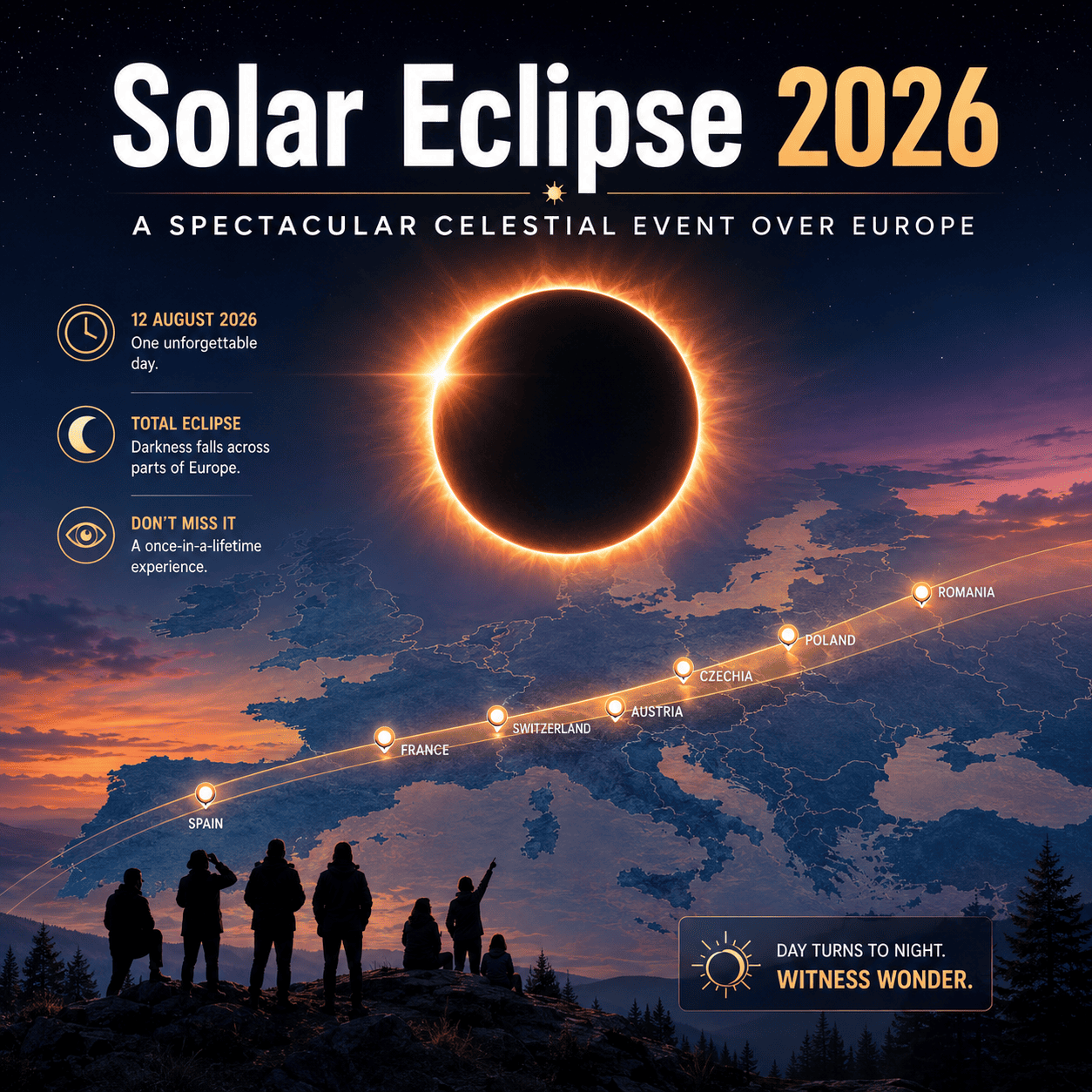
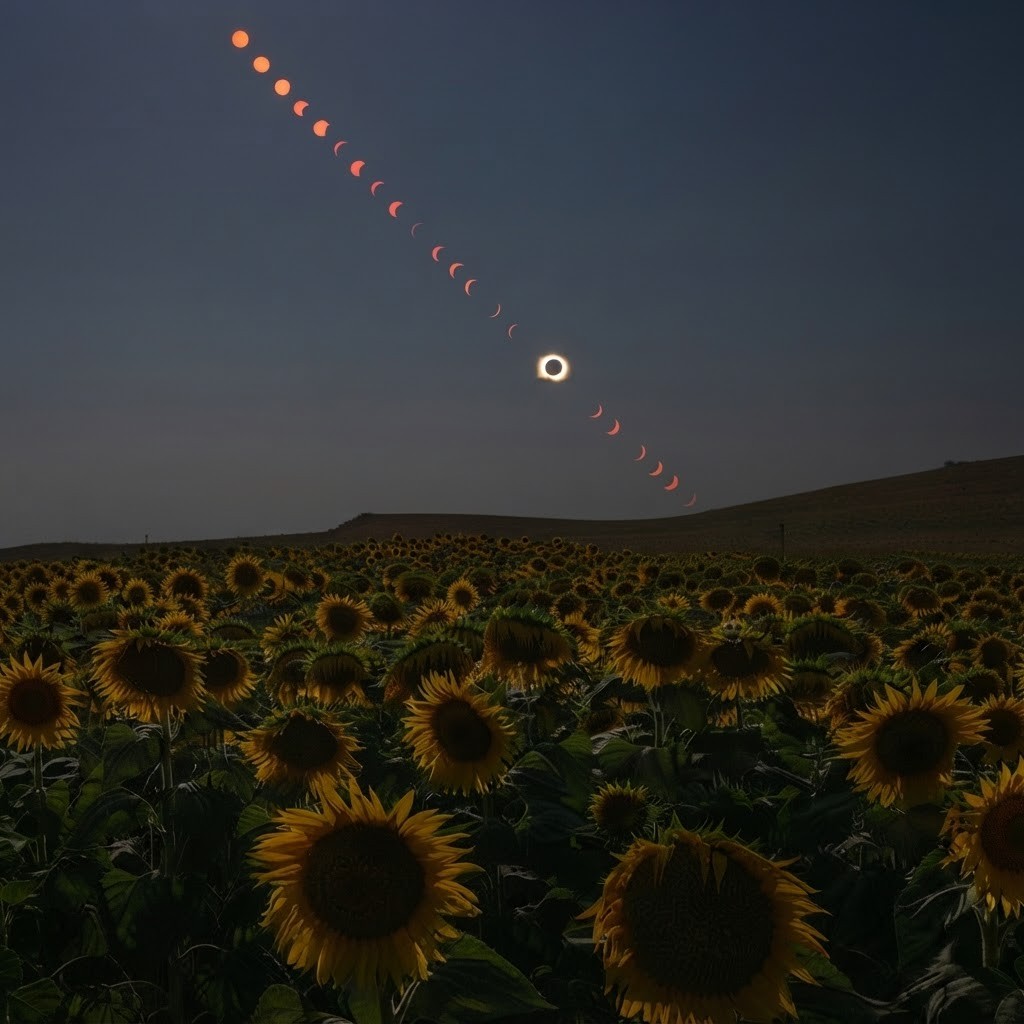
The Solar Eclipse 2026 transformed an ordinary August evening into one of Europe’s most memorable astronomical events in decades. On August 12, the Moon passed directly between Earth and the Sun, carrying a narrow path of totality across northern Russia, Greenland, Iceland, the North Atlantic, Spain and a small corner of Portugal before the spectacle ended close to sunset.
For people standing inside that narrow path, daylight briefly faded and the Sun’s bright surface disappeared behind the Moon, revealing the faint corona that is normally hidden from view. Far beyond the path of totality, millions more experienced a partial eclipse across Europe, parts of North America and northwestern Africa.
What made this eclipse especially memorable was not only where it happened, but when. Across Spain, totality arrived late in the evening, producing a rare combination of eclipse darkness and sunset colors. In Iceland, clouds complicated months of carefully planned eclipse chasing, while across the rest of Europe the partially covered Sun appeared beside familiar skylines and landmarks.
Together, those different experiences turned a short astronomical event into a shared moment across much of the Northern Hemisphere.
Where Was the August 12 Total Solar Eclipse Visible?
According to NASA’s official guide to the August 12 total solar eclipse, the path of totality crossed Greenland, western Iceland, northern Russia, the Atlantic Ocean, northern Spain and a very small section of northwestern Portugal. Most locations within the path experienced less than two minutes of complete darkness, although places near the center line over Russia, Greenland and the North Atlantic had somewhat longer periods of totality.
NASA calculated that the longest possible view of the corona from the ground was about 2 minutes and 18 seconds. In western Iceland, totality lasted up to roughly 2 minutes and 13 seconds, while Spanish viewers generally had shorter windows because the Sun was already approaching the horizon.
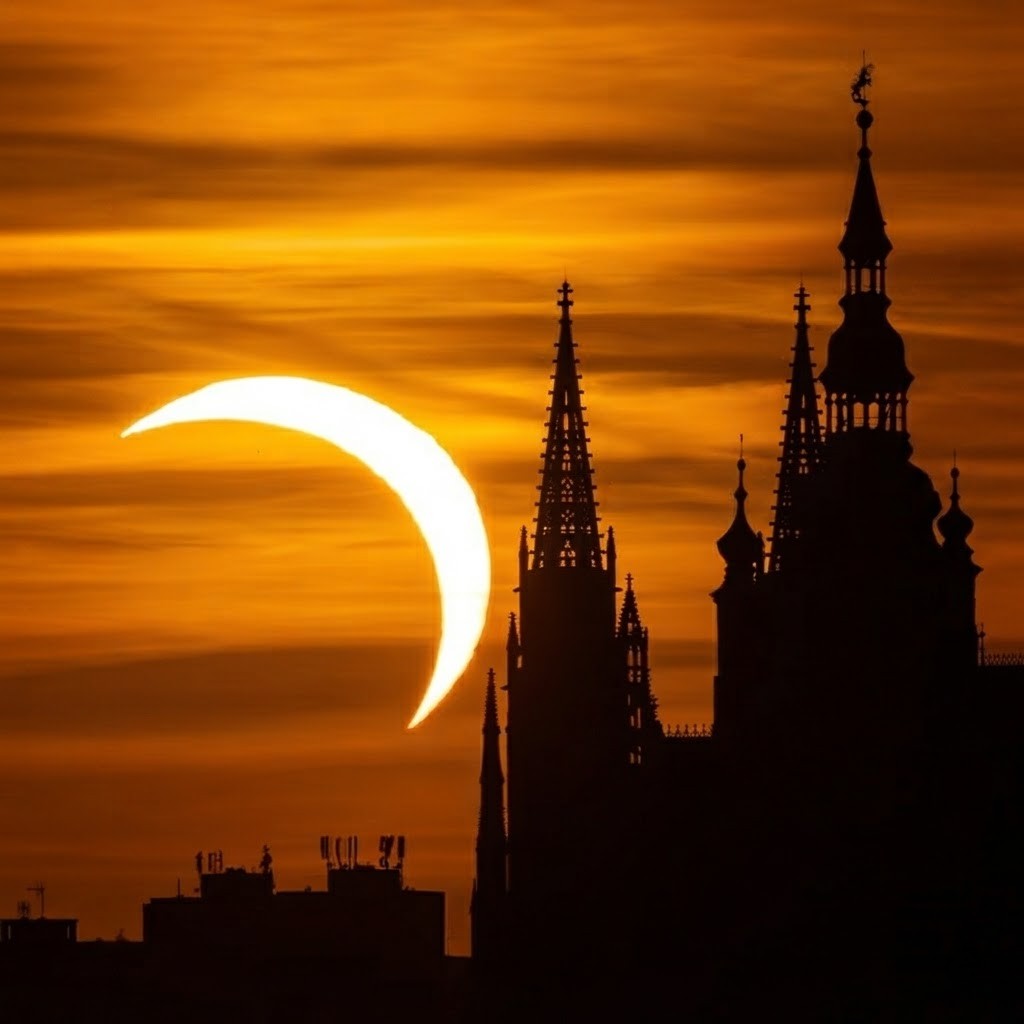
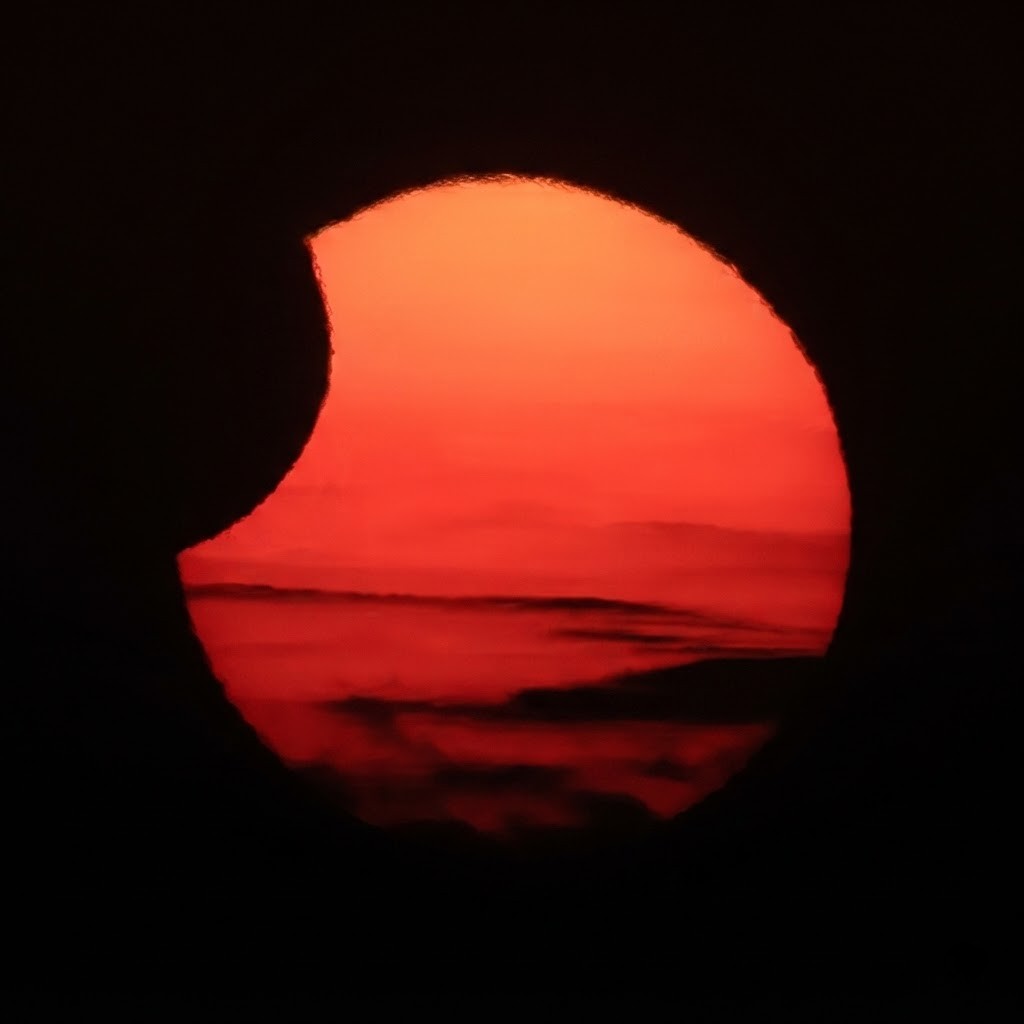
The timing created one of the event’s most distinctive features. In several parts of mainland Europe and northwestern Africa, the Sun set while still partially eclipsed, so viewers saw a crescent-shaped or partially covered Sun descending toward the horizon rather than returning to its normal appearance before sunset.
Spain Became the Center of Solar Eclipse 2026 Fever
Although the eclipse crossed several countries, Spain became its most visible gathering point. The path of totality stretched through large parts of the north before continuing toward the Balearic Islands, giving both residents and international visitors a wide range of viewing locations.
In Buitrago de Lozoya, north of Madrid, spectators watched the sky darken shortly after 8:30 p.m. as bright points of sunlight known as Baily’s beads appeared around the edge of the Moon. Moments later, the remaining sunlight disappeared and the crowd reacted as evening briefly turned into something closer to night.
The scene was repeated across numerous Spanish towns, observatories and rural viewing areas. Spain had prepared for extraordinary visitor numbers, with authorities creating dedicated viewing locations and deploying large security operations because the event coincided with a period of severe wildfire risk. Reuters reported that as many as six million visitors were expected across areas under the eclipse path, while 25,000 police officers and nearly 100 aircraft and helicopters were deployed as part of the wider safety effort.
Those preparations underline how much the event had grown beyond astronomy. For many destinations, particularly in less-visited inland areas, the eclipse became a major tourism event as people traveled specifically to stand within the Moon’s shadow.
Iceland Offered Totality — but the Weather Had Other Plans
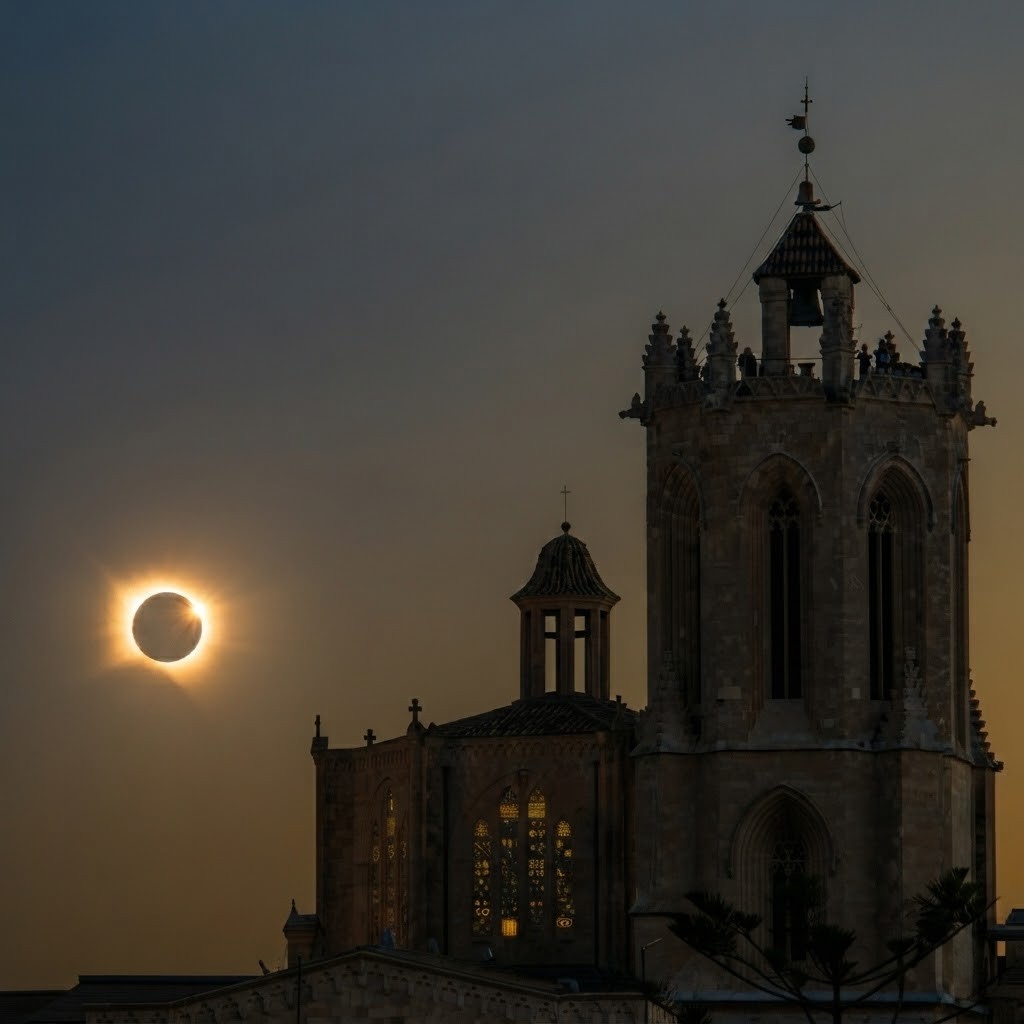
Iceland had been another favorite destination for eclipse travelers because its western coast lay close to a particularly favorable part of the totality path. The country welcomed as many as 80,000 visitors around the event, a significant influx for a nation with a population of roughly 400,000.
Yet eclipse chasing always comes with a variable that no map can guarantee: weather.
Heavy clouds covered central Reykjavik during the crucial moments, preventing many people from seeing the corona directly even though the dramatic darkening of totality was still obvious. Farther west, breaks in the clouds gave some observers a clearer view as the Moon completely covered the Sun.
The contrast between Spain and Iceland became one of the most human parts of the Solar Eclipse 2026 story. Months of travel planning could put someone in exactly the right geographic location, but a few kilometers of cloud cover could still determine whether the experience became a perfect view of the corona or simply an extraordinary few minutes of darkness.
Across Europe, the Eclipse Created a Different Kind of Show
Outside the path of totality, the Moon never completely covered the Sun, yet the eclipse remained striking across much of Europe.
NASA calculated approximately 91% solar coverage in London, 92% in Paris, 94% in Dublin, 92% in Milan and 85% in Berlin at maximum eclipse. Madrid, although outside the narrow totality path itself, reached approximately 99% coverage.
That meant viewers in these cities did not experience the sudden darkness or visible corona of totality, but the remaining sunlight was reduced enough to create unusual evening illumination and dramatic photographic opportunities.
Paris produced one of the most recognizable images of the day when the partially eclipsed Sun appeared behind the silhouette of the Eiffel Tower. Reuters photographers also documented the eclipse behind landmarks, landscapes and city skylines across Europe, showing how the same celestial event could look completely different depending on where the observer stood.
Why the Sunset Timing Made Spain’s Eclipse So Unusual
A total solar eclipse is already rare from any single location, but Spain’s position added another visual element because totality occurred shortly before sunset.
In cities such as León, totality began around 8:28 p.m. local time, while Valencia and Zaragoza experienced it only minutes later. Because the Sun was already low in the western sky, the return of daylight after totality blended almost immediately into natural sunset colors rather than restoring the bright midday conditions associated with many eclipses.
This created an unusual sequence: daylight faded as the Moon covered the Sun, totality briefly darkened the landscape, color returned to the sky and then the Sun descended toward the horizon.
It was precisely this interaction between eclipse and sunset that made many Spanish photographs look different from images of the 2024 North American eclipse, where totality occurred much higher in the daytime sky.
NASA Used the Eclipse as a Flying Science Laboratory
For the public, totality lasted only a minute or two. For researchers, however, those brief moments offered a valuable opportunity to examine parts of the Sun that are normally extremely difficult to study.
NASA sent a WB-57 high-altitude research aircraft to about 50,000 feet, carrying four cameras designed to photograph the solar corona in multiple visible and infrared wavelengths. By flying along the path of the Moon’s shadow at roughly 460 miles per hour, the aircraft extended its observation of the corona to nearly three minutes, compared with a maximum of about 2 minutes and 18 seconds from the ground.
Researchers hope the images will help them study solar prominences, rapid changes within the corona and one of solar physics’ longstanding questions: why the Sun’s outer atmosphere reaches temperatures approaching a million degrees even though the visible surface below is much cooler. The observations can also help scientists investigate the relationship between material in the corona and the solar wind that flows outward through the solar system.
NASA-supported student teams also launched scientific balloons from Iceland and Spain. Some measured changes in the lower atmosphere as sunlight suddenly disappeared, while others carried cameras and instruments designed to track ozone and other atmospheric effects before, during and after totality.
In that sense, the eclipse was more than a visual spectacle. It briefly turned parts of Earth into a natural laboratory.
Solar Eclipse Eye Safety Still Matters After the Event
The enormous number of photographs shared after the eclipse can make solar viewing look deceptively simple, but looking directly at a partially eclipsed Sun without proper protection can cause serious eye injury.
NASA states that ordinary sunglasses are not safe for direct solar viewing, regardless of how dark they appear. During all partial phases, observers need suitable solar viewing glasses or handheld viewers that comply with the ISO 12312-2 international standard.
The only exception occurs during true totality, when the Moon completely blocks the Sun’s bright face for observers standing inside the path of totality. The moment even a small portion of the bright solar surface becomes visible again, eye protection is required. People viewing only a partial eclipse should never remove appropriate protection while looking directly at the Sun.
Cameras, binoculars and telescopes require additional care because concentrated sunlight passes through the optics. NASA warns that eclipse glasses worn over the eyes are not sufficient when looking through these devices; a proper solar filter must instead be attached to the front of the optical equipment.
These precautions will remain important because Europe is not finished with major eclipses.
When Is the Next Total Solar Eclipse?
People who missed August 12 will not have to wait decades for another major event in this part of the world.
Spain is scheduled to experience another total solar eclipse on August 2, 2027, only a year after the 2026 event. The eclipse path will continue across northern Africa and the Middle East, with some locations experiencing much longer totality than was possible in 2026.
Then, on January 26, 2028, Spain and Portugal will experience an annular solar eclipse, in which the Moon passes in front of the Sun but appears too small to cover it completely, leaving a bright ring around its edge.
Together, the 2026, 2027 and 2028 events have become known as the Iberian Eclipse Trio, giving Spain an unusually prominent role in European eclipse watching over three consecutive years.
Why Solar Eclipse 2026 Will Be Remembered
The Solar Eclipse 2026 lasted only a short time at any individual viewing location, yet the event connected remarkably different places and experiences.
In Spain, crowds watched totality merge almost directly into sunset. In Iceland, thousands waited beneath uncertain clouds for a break in the sky. In Paris, a partial eclipse transformed the Eiffel Tower into a striking foreground, while millions elsewhere watched the Sun become a narrowing crescent without ever entering total darkness.
At the same time, scientists were flying above the clouds and sending instruments into the atmosphere to study what happened when the Moon’s shadow crossed Earth.
That combination of public wonder and scientific opportunity explains why eclipses continue to attract such enormous attention. We know exactly why they happen and can predict them far in advance, yet the moment daylight unexpectedly fades still feels extraordinary when experienced in person.
For another recent story from Dalas Market, readers following major events beyond astronomy can also explore our feature on the Russell Westbrook retirement and the legacy of his 18-year NBA career.
Frequently Asked Questions
When was the Solar Eclipse 2026?
The total solar eclipse occurred on August 12, 2026. Its path of totality crossed northern Russia, Greenland, Iceland, the North Atlantic, Spain and a small part of Portugal, while a partial eclipse was visible across a much wider region.
How long did the 2026 total solar eclipse last?
The maximum possible totality from the ground was approximately 2 minutes and 18 seconds near the center of the eclipse path. Most populated locations experienced less than two minutes of complete coverage.
Was the eclipse total in London or Paris?
No. Both cities experienced a partial eclipse. NASA calculated roughly 91% coverage in London and 92% in Paris, meaning a portion of the Sun remained visible throughout the event.
Could people look at the total solar eclipse without glasses?
Only during the brief period of complete totality, when the Moon fully covered the Sun’s bright face, was direct viewing safe. During every partial phase, including before and immediately after totality, proper solar viewing protection was required.
When is the next total solar eclipse visible from Europe?
Another total solar eclipse will cross Spain on August 2, 2027. Spain and Portugal will then experience an annular eclipse on January 26, 2028.
Related post